Health and Safety Policy for Hedge Trimming Dulwich
 This Health and Safety policy sets out the standards and procedures for Hedge Trimming Dulwich and related garden maintenance services. It applies to all staff, contractors and sub‑contractors engaged in hedge cutting, pruning and general green maintenance within our service area. The policy aims to protect employees, clients, members of the public and property by defining responsibilities, risk controls and the safe systems of work used during hedgerow and boundary maintenance. The document references best practice for hedge trimming in Dulwich while maintaining an operational focus rather than detailed legal citation.
Scope: This policy covers routine and one‑off tasks including: hedgerow pruning, formative trimming, removal of cut material, shallow root works adjacent to hedges and the operation of hand and powered tools. It addresses site assessment, personal protective equipment (PPE), training, equipment maintenance, traffic and pedestrian management, and waste handling. All personnel must follow the procedures for Dulwich hedge trimming to ensure consistent safety performance across jobs.
Responsibilities and Leadership
Management holds the overall responsibility to ensure that policies are implemented, resources are provided and that employees receive induction and refresher training. Supervisors and team leads are responsible for daily risk assessments, briefing teams and ensuring compliance with safe working methods. All operatives must work within company procedures, report hazards or defects immediately and stop work if they believe conditions are unsafe. Key responsibilities include:- Site risk assessment before work begins
- Correct selection and use of PPE, such as eye protection, gloves and hearing protection
- Ensuring tools and machinery are inspected and maintained
Risk Assessment and Planning
Before any hedge maintenance task the site must be surveyed to identify hazards such as overhead services, buried utilities, fragile boundaries, traffic, public access and protected species. A documented task plan should be prepared for significant jobs and briefed to the team. Where necessary, include temporary barriers and signage to segregate work areas from the public and to control vehicle movements during delivery and waste removal.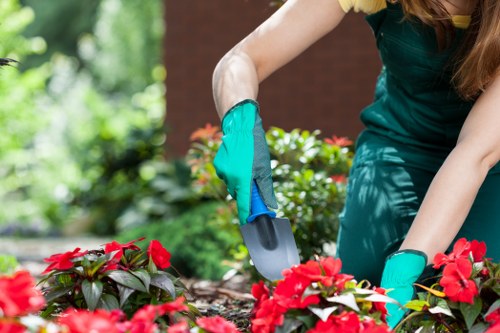 Safe systems of work require that operatives use correct cutting techniques and appropriate powered equipment with manufacturer guards in place. Use of ladders should be minimised; where elevation is required, use safe access equipment and ensure it is used by trained staff. When employing hedge maintenance Dulwich crews, supervisors must allocate tasks according to competence and ensure that hazardous tasks have a designated lookout or banksman where public or vehicle traffic is nearby.
Equipment and PPE: All tools, from shears to powered trimmers, must be subject to routine pre‑use checks and a regular maintenance schedule. Consumable safety items such as chainsaw protective clothing (if used), ear defenders, eyewear and gloves must be routinely replaced and available to staff. Training records and equipment inspection logs should be maintained and available for review.
Environmental and wildlife precautions are integral to responsible hedge care. Before work begins, survey hedges for nests, roosts or other wildlife habitats; where found, avoid disturbance where possible and reschedule work outside sensitive seasons. Dispose of green waste in an environmentally responsible way and keep the working area tidy to reduce tripping hazards and fire risk.

Incident Management and First Aid
All staff must be aware of incident reporting procedures. Minor injuries are to be recorded in the company accident book; more serious incidents should follow the company’s incident escalation process. First aid kits must be accessible, and a sufficient number of team members trained in first aid should be present on site. Emergency contact protocols and nearest medical facility details should be part of the site briefing, without including customer contact details here.
Training, Supervision and Competence
Our company commits to providing ongoing training that covers tool operation, manual handling, risk assessment and environmental awareness. Competence is confirmed through observed performance and training records. Supervisors are responsible for maintaining records of inductions, refresher training and specific qualifications relevant to hedge work and machinery operation.Monitoring and review: The policy is supported by regular site audits, toolbox talks and periodic reviews to ensure it remains effective and current with operational practice. Supervisors should carry out random safety checks, and management will review incident trends to target improvement actions. All operatives are encouraged to suggest improvements through established internal reporting channels.
Compliance and enforcement: Failure to follow this policy may result in disciplinary action. However, the emphasis is on coaching and correction to achieve safer working behaviour and a culture of care. Hedge cutting Dulwich teams are expected to adopt a responsible approach to safety and environmental stewardship in all activities.
Conclusion: This Health and Safety policy provides a clear framework for delivering safe, professional Dulwich hedge care and related garden maintenance. It is a living document and will be updated as practices evolve. All personnel must be familiar with its contents and demonstrate adherence through safe practice, reporting and continuous improvement.